Explore the facts behind herbs vs. pharmaceuticals. Learn which is safer, more effective, and how to make smart health choices for your body.
Introduction
For thousands of years, plants have played a vital role in healing and maintaining health. Even in modern medicine, nearly 40% of pharmaceuticals are inspired by nature and traditional remedies, leading to groundbreaking treatments like aspirin, artemisinin, and therapies for childhood cancer. Today, modern medicine—created in labs and tested by scientists—helps most people recover from sickness. Some prefer natural remedies, while others trust prescription drugs. Both have benefits and risks, so it’s important to know how they work and when to use them.
This article breaks down the difference between herbs vs. pharmaceuticals, showing how they work, their pros and cons, and whether you can safely combine both.
What Are Herbal Remedies?
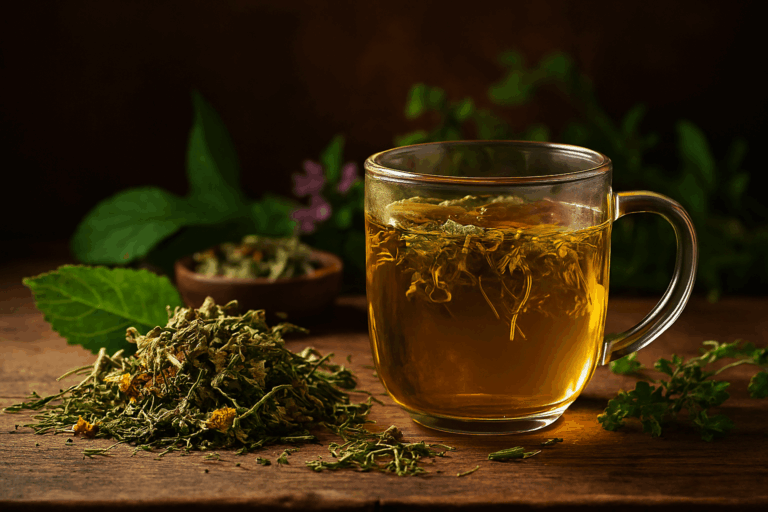
Herbal remedies come from plants, including leaves, roots, and flowers. Many cultures have used herbs for healing over the years:
- Traditional Chinese Medicine (TCM) – Uses herbs like ginseng and astragalus to improve energy and strengthen the immune system.
- Ayurveda – Uses turmeric and ashwagandha to help with stress, inflammation, and overall health.
- Western Herbalism – Uses echinacea and valerian root to support the immune system and improve sleep.
Want to dive deeper into the basics? Explore our Herbal Medicine 101 guide to learn how to get started with herbs.
Unlike pharmaceuticals, herbal remedies aren’t always tested or standardized, so their quality and effectiveness can vary.
History of Herbal Medicine
For centuries, people have relied on plants to treat sickness. Ancient Egyptians wrote about herbal remedies, and Indigenous cultures passed down healing traditions. Even today, many people use herbs alongside modern medicine.
Some herbal treatments work well and have been tested, while others still need more study. Scientists continue to research which herbs provide real benefits.
How People Use Herbal Remedies Today
Herbs come in many forms, such as teas, capsules, powders, and liquid extracts. Some people also use them in food or skincare products. Scientists keep studying herbs to understand how they work and whether they are safe. Many doctors now use both herbal and modern medicine in integrative healthcare, combining both methods to improve health.
What Are Pharmaceuticals?
Pharmaceutical drugs come from laboratories, where scientists carefully test them before use. These medicines:
- Contain exact amounts of active ingredients.
- Require approval from groups like the Food and Drug Administration (FDA) or World Health Organization (WHO).
- Treat serious illnesses and medical emergencies.
- Go through years of research to ensure they are safe and effective.
Pharmaceuticals act quickly and target specific health problems. However, they may cause side effects and often require a doctor’s prescription.
How Scientists Make Medicines
The discovery of penicillin in 1928 changed medicine forever. Since then, scientists have created many drugs to treat infections, relieve pain, and manage long-term illnesses. Pharmaceutical companies spend years testing medicines before they reach the public.
Types of Medicines
- Over-the-counter drugs (OTC) – Includes pain relievers and allergy medicines that don’t need a prescription.
- Prescription drugs – Includes antibiotics and blood pressure medicines that require a doctor’s approval.
- Biologics – Includes vaccines and insulin, made from living organisms.
- Controlled substances – Includes opioids and sedatives, which require strict regulation because they can be addictive.
Herbs vs. Pharmaceuticals: How Do They Compare?
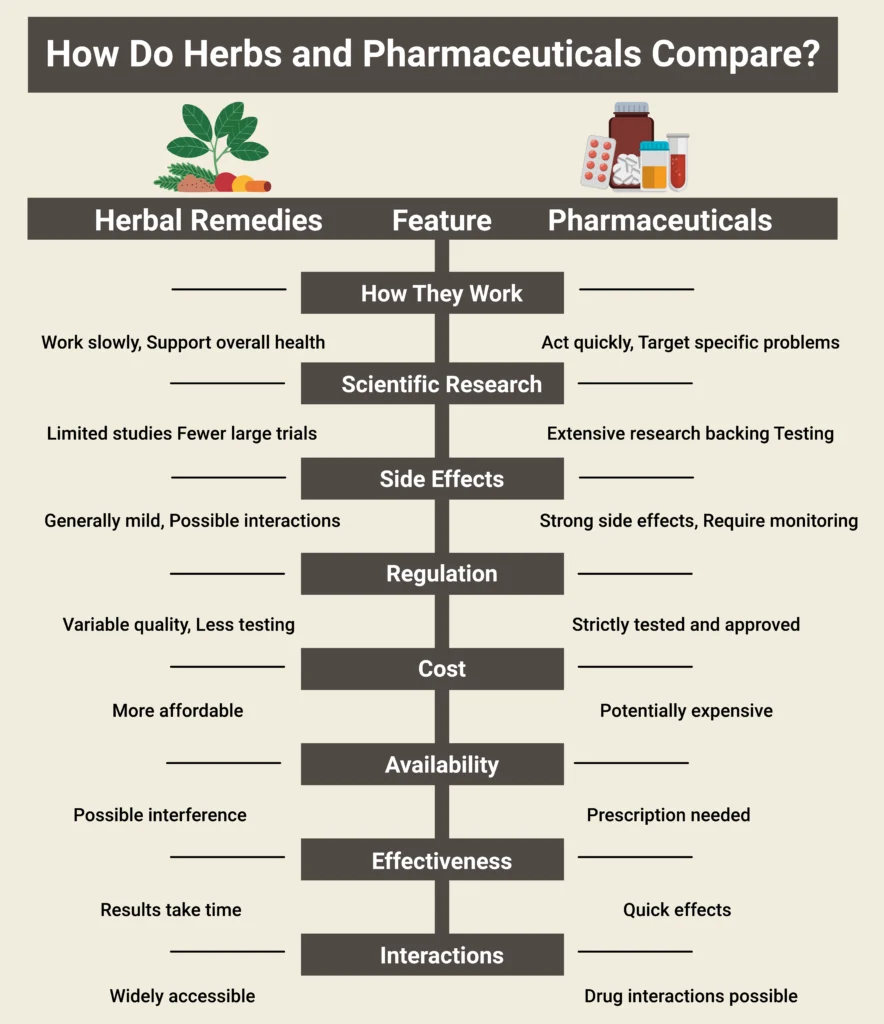
| Feature | Herbal Remedies | Pharmaceuticals |
| How They Work | Work slowly and support overall health | Act quickly and target specific problems |
| Scientific Research | Some studies, but fewer large trials | Backed by extensive research and testing |
| Side Effects | Usually mild but can interact with medicines | Can have strong side effects that require monitoring |
| Regulation | Not always tested, so quality varies | Strictly tested and approved for safety |
| Cost | Usually more affordable | Can be expensive without insurance |
| Availability | Found in stores or online | Often requires a doctor’s prescription |
| Effectiveness | Takes time to show results | Works quickly and reliably |
| Drug Interactions | Can interfere with some medicines | Can interact with other drugs or conditions |
Herbal and pharmaceutical treatments both have benefits. Herbal remedies improve long-term health, while pharmaceuticals treat urgent health problems. Some people use both for the best results.
Can You Use Herbs and Medicines Together?
Many people use herbal medicine and pharmaceuticals together. Herbs support long-term wellness; drugs provide fast relief for urgent issues.
Can You Combine Herbs and Pharmaceuticals? Yes—with caution. Some herbs affect how medicines work:
- St. John’s Wort – Makes antidepressants and birth control pills less effective.
- Garlic – Thins blood, which can increase bleeding risk when taken with blood thinners.
- Ginseng – Raises or lowers blood sugar, which may affect diabetes medicines.
To stay safe, always talk to a doctor before combining herbs with medicine.
How to Use Herbal Remedies Safely
- Ask a doctor before trying herbal remedies, especially if you take other medicines.
- Buy from trusted stores to ensure high-quality products.
- Follow dosage instructions to avoid unwanted side effects.
- Watch for allergic reactions and stop using herbs if they cause problems.
- Pay attention to how your body reacts to herbal supplements.
Understanding herbs vs. pharmaceuticals empowers better health decisions.
Conclusion
Herbs and pharmaceuticals both have a place in healthcare. Herbal remedies support general wellness, while modern medicines offer quick, targeted solutions. Choosing between herbal medicine and pharmaceuticals depends on your needs. Often, combining both—with medical guidance—brings the best results.
Learning the science behind herbs vs. pharmaceuticals helps you take control of your well-being.
Frequently Asked Questions
Can herbs replace medicine?
Not always. Herbs help with minor issues, but serious illnesses usually need medical treatment.
Are herbs safer than medicine?
Sometimes. Herbs can still cause side effects or interfere with medicines. Always ask a doctor before using them.
How long do herbs take to work?
Herbs work slowly and may take weeks or months, while medicines act faster.
Can I take herbs with my medicine?
Sometimes, but some herbs interfere with medicines. Always check with a doctor first.
Do all medicines have side effects?
Most do, but they vary. Always read labels and talk to a doctor if you’re worried.
Want More Health Tips?
Stay informed about the latest natural health research and wellness tips! Subscribe to our newsletter for expert insights, herbal remedies, and pharmaceutical updates delivered to your inbox.
For more natural health insights, subscribe to our newsletter today!
References
- Gaynes, Robert. “The Discovery of Penicillin—New Insights After More Than 75 Years of Clinical Use.” Emerging Infectious Diseases vol. 23,5 (2017): 849–853. doi:10.3201/eid2305.161556
- World Health Organization. “Traditional Medicine Has a Long History of Contributing to Conventional Medicine and Continues to Hold Promise.” World Health Organization, 10 Aug. 2023, www.who.int/news-room/feature-stories/detail/traditional-medicine-has-a-long-history-of-contributing-to-conventional-medicine-and-continues-to-hold-promise.
- Makayla Meixner. “Astragalus: An Ancient Root with Health Benefits.” Healthline, Healthline Media, 31 Oct. 2018, www.healthline.com/nutrition/astragalus.
- Kubala, Jillian. “9 Proven Health Benefits of Ashwagandha.” Healthline, 7 Jan. 2022, www.healthline.com/nutrition/ashwagandha.
- Mount Sinai. “Herbal Medicine Information.” Mount Sinai Health System, 6 Nov. 2015, www.mountsinai.org/health-library/treatment/herbal-medicine.
- Mount Sinai. “St. John’s Wort Information.” Mount Sinai Health System, www.mountsinai.org/health-library/herb/st-johns-wort.
- Lawn, A, and P Sains. “Comment on: Not just a vampire repellent: the adverse effects of garlic supplements in surgery.” Annals of the Royal College of Surgeons of England vol. 94,6 (2012): 451. doi:10.1308/003588412X13373405385098
- Geng, Caitlin. 2022. “What to Know about Ginseng and Type 2 Diabetes.” Medicalnewstoday.com. Medical News Today. May 25, 2022. https://www.medicalnewstoday.com/articles/ginseng-and-diabetes-type-2#risks.

[…] Herbs vs. Pharmaceuticals: What Science Says About Natural Remedies […]