When a cold or flu hits, it often feels like your body is fighting on every front — the sniffles, the sore throat, the pounding head, the cough that just won’t quit. And while medicine has its place, sometimes the gentler, comforting approach nature offers is exactly what your body needs.
In this complete guide, you’ll discover how natural remedies can support your recovery: what they can help with, what they can’t replace, and how to use them safely and effectively. We’ll walk through everyday ingredients like honey, ginger, garlic and turmeric, herbal options such as echinacea and elderberry, and essential do’s and don’ts. You’ll also learn the key signs to watch for and when it’s time to seek medical care.
Let’s begin from the most important place — what you’re actually feeling.
Let’s Start With What You’re Feeling
1. Common Symptoms of Cold, Cough & Flu
Understanding your symptoms helps you choose the right remedies and know when to rest at home versus when to get medical help. While colds, coughs and the flu all come from viruses, they each show up a little differently:
Cold:
- Runny or stuffy nose
- Sneezing
- Mild sore throat
- Dry or later productive cough
- Mild fatigue
- Little or no fever
Flu (Influenza):
- Sudden onset
- Higher fever
- Strong body aches
- Chills
- Fatigue
- Headache
- Possible cough and sore throat
Cough (general):
- Dry: feeling of a tickle or irritation
- Productive: brings up mucus
- Can accompany both cold and flu
Recognising your pattern helps you decide the level of care you need and the remedies that may offer the most relief.
2. Why Natural Remedies Are Effective
Natural remedies work by supporting your body’s innate healing mechanisms rather than by directly “killing” a virus. Here’s how:
Supportive care: Hydration, rest and warm fluids help thin mucus, reduce throat irritation and promote comfort. Research shows that warm liquids may ease congestion and help prevent dehydration.
Symptom relief: Ingredients like honey coat the throat, easing cough; steam helps loosen blocked nasal passages; herbs may offer mild antiviral or anti-inflammatory support. For example, honey was found to reduce cough frequency in children older than 1 year.
Immune support: While evidence is mixed, some herbs and nutrients (echinacea, zinc) show moderate benefit in reducing duration/severity of colds.
Important caveats: These remedies do not cure the flu or cold virus.
Evidence quality is variable; many studies are small or heterogeneous.
They work best when used early, combined with rest, and when symptoms are mild to moderate.
3. Best Natural Remedies (Kitchen & Lifestyle) for Cold, Cough & Flu
Here’s a breakdown of the most effective everyday remedies you can try.
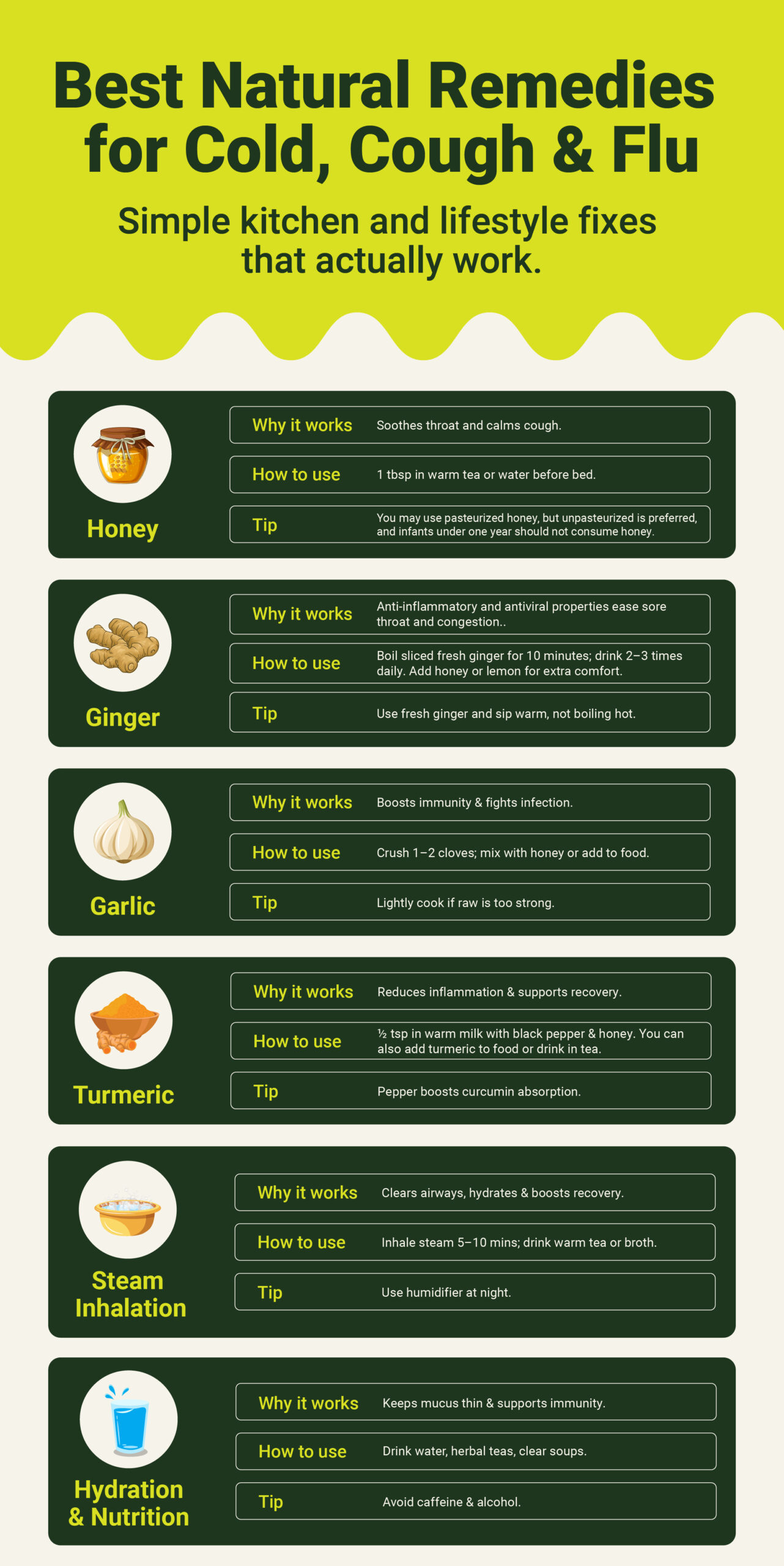
Honey
Why it works: Studies show that honey can calm cough in children and adults by coating the throat, reducing irritation and possibly reducing cough frequency.
How to use: Mix 1 tablespoon of raw honey into warm water or herbal tea (avoid giving honey to children under 1 year). At bedtime, honey in warm lemon tea can improve sleep by reducing cough. Tip: Choose raw or unpasteurised if available, but ensure it’s safe and store properly.
Ginger
Why it works: Ginger contains gingerol and other compounds with anti-inflammatory and soothing effects, helping ease sore throat and possibly reduce viral symptoms. How to use: Slice fresh ginger, boil in water for 10 minutes, then drink as a tea 2-3 times daily. Add honey or lemon for added benefit. Tip: Use fresh ginger for max effect; drink warm, not boiling hot.
Garlic
Why it works: Garlic contains allicin, a compound with antimicrobial and immune-boosting properties; some studies suggest people who take garlic may have fewer cold days. How to use: Crush 1-2 cloves of garlic and mix with honey/olive oil or add to soup. Alternatively, roast garlic into meals for a gentler flavour. Tip: If raw garlic is too strong, lightly cook it but keep it tender.
Turmeric
Why it works: Turmeric’s curcumin offers anti-inflammatory and antioxidant support, which may help reduce symptoms of cold or flu. How to use: Make “golden milk” by mixing ½ tsp turmeric in warm milk (dairy or plant-based) with a pinch of black pepper (to improve absorption) and honey. Drink before bed. Tip: Use fresh ground turmeric; add pepper to boost effect.
Steam Inhalation / Warm Fluids / Rest
Why they work: Steam loosens mucus in airways; warm fluids hydrate and soothe; rest supports immune recovery. How to use: Boil water, kneel with a towel over your head, inhale steam for 5-10 minutes (optional: add eucalyptus or peppermint oil). Sip warm herbal tea, broth or warm water with lemon/honey frequently. Tip: Use a humidifier at night if air is dry.
Hydration & Nutrition
Why it works: Hydration keeps mucus thin and helps the body flush out viral particles; good nutrition supports immune function. How to use: Drink plenty of water, herbal teas, clear soups; aim for light, nutritious meals rich in vegetables, fruits, lean protein. Avoid caffeinated or alcoholic beverages which can dehydrate. Tip: If appetite is low, try broth-based soups or blended smoothies.
4. Herbal Treatments for Cough & Cold
Here are some herbal options that go beyond kitchen staples. Use with caution (consult a healthcare provider if on medications or pregnant).
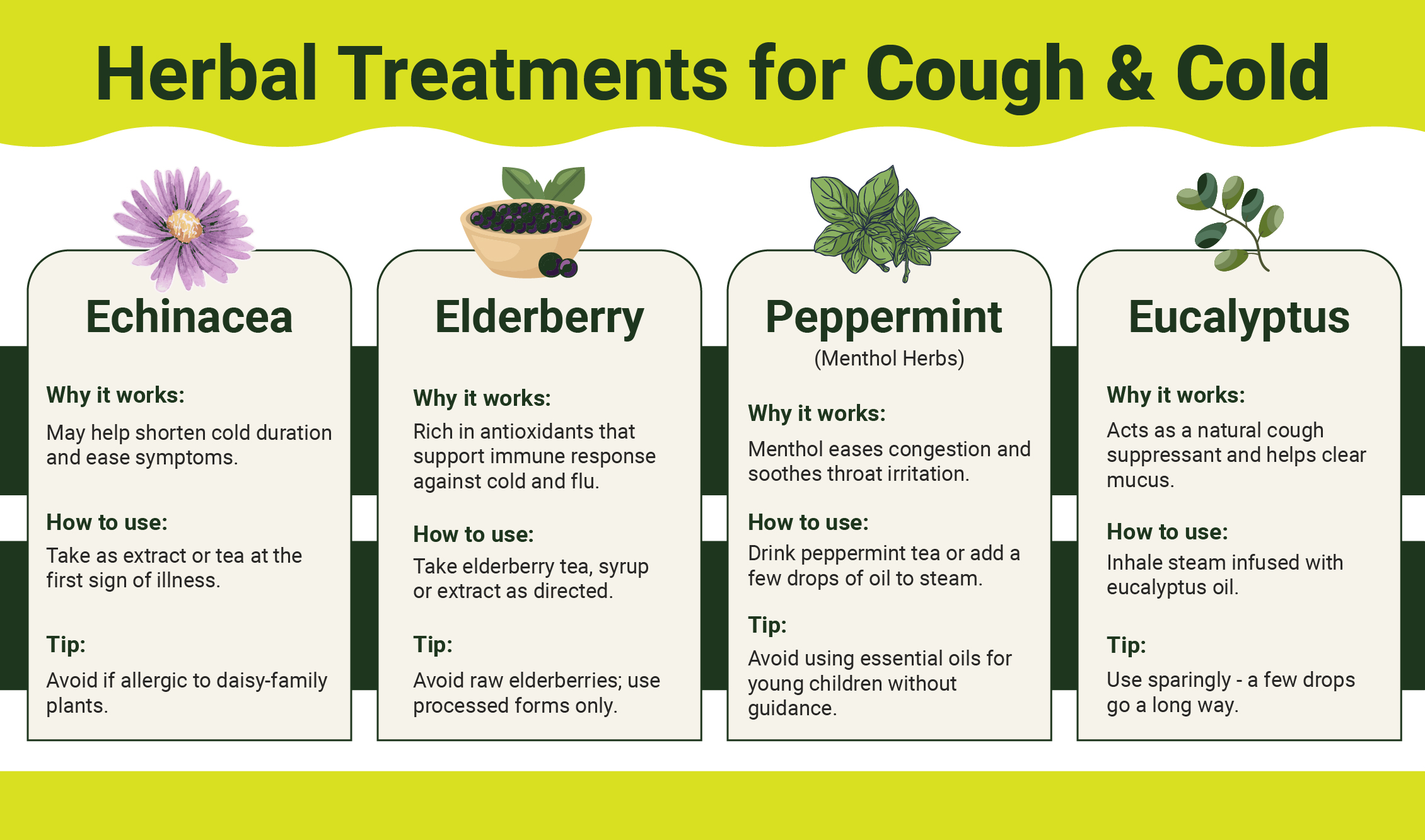
Echinacea
Evidence: Some trials show benefit in treating colds (not strongly preventive).
How to use: Echinacea extract or tea, begin at first sign of symptoms. Safety note: Some people allergic to plants in the daisy family should avoid.
Elderberry
Why it works: Rich in antioxidants and frequently used for flu/cold relief; anecdotal and early research suggest immune-supportive role. How to use: Elderberry syrup or extract, according to product instructions. Safety note: Raw elderberries can be toxic; use processed standardised preparations.
Peppermint (Menthol Herbs)
Why it works: Menthol is a decongestant and throat-soother; peppermint tea and essential oil (for steam) can relieve cough and congestion. How to use: Drink peppermint tea or add a few drops of peppermint essential oil to steam inhalation. Safety note: Avoid giving essential oils to small children without professional guidance.
Additional note:
Herbs like Eucalyptus (for inhalation) have shown antitussive and expectorant effects in some controlled studies.
5. Do’s & Don’ts When Using Natural Remedies
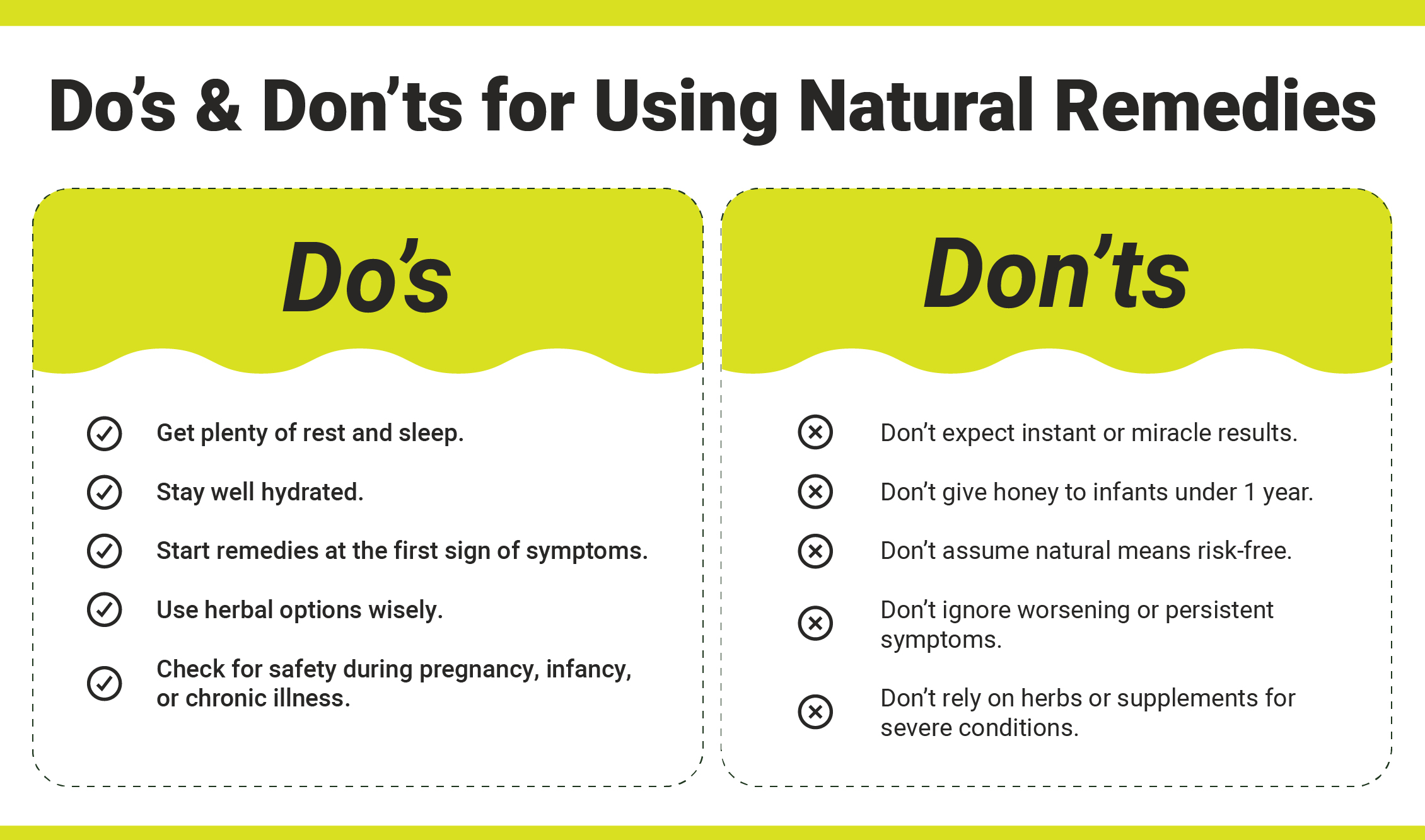
Do’s:
- Prioritise rest and sleep.
- Stay well hydrated.
- Use natural remedies early (at first symptom).
- Combine safe kitchen remedies with proper herbal options (if appropriate).
- Check for contraindications (pregnancy, young infancy, chronic disease).
Don’ts:
- Don’t expect a “miracle cure” – these remedies support comfort, not replace medical care.
- Don’t give honey to infants under 1 year old (risk of botulism).
- Don’t assume “natural” means “no risk” – herbs can interact with medications.
- Don’t delay seeking medical help if symptoms worsen or persist.
- Don’t rely solely on supplements/herbs when severe symptoms are present.
6. When to See a Doctor

If you experience any of the following, seek professional medical attention:
- Fever over 102 °F (38.9 °C) lasting more than 3 days.
- Difficulty breathing, chest pain or tightness.
- Persistent cough lasting more than 2–3 weeks, or productive with green/yellow phlegm.
- Dehydration (very dark urine, very little urination, dizziness).
- Underlying chronic conditions (asthma, COPD, immunocompromised).
- Children, older adults or pregnant individuals with worsening symptoms.
Remember: Natural remedies can support recovery—but they do not replace the need for medical diagnosis or treatment when the illness goes beyond mild.
Conclusion
Battling a cold, cough or flu is never fun—but you don’t have to suffer helplessly. With simple, evidence-informed natural remedies like honey, ginger, garlic, turmeric, proper hydration, steam and herbal supports, you can ease symptoms, support your recovery and feel better faster. Use these tools early, responsibly and alongside good rest and nutrition. And when in doubt, always seek professional care.
Start by picking one or two remedies that work for you and make them part of your recovery plan. Your body will thank you.